Your own store app or a marketplace listing: what each one gives you
A marketplace brings shoppers but keeps the customer. Your own store keeps them. Here is how to weigh the two, and when your own app makes sense.
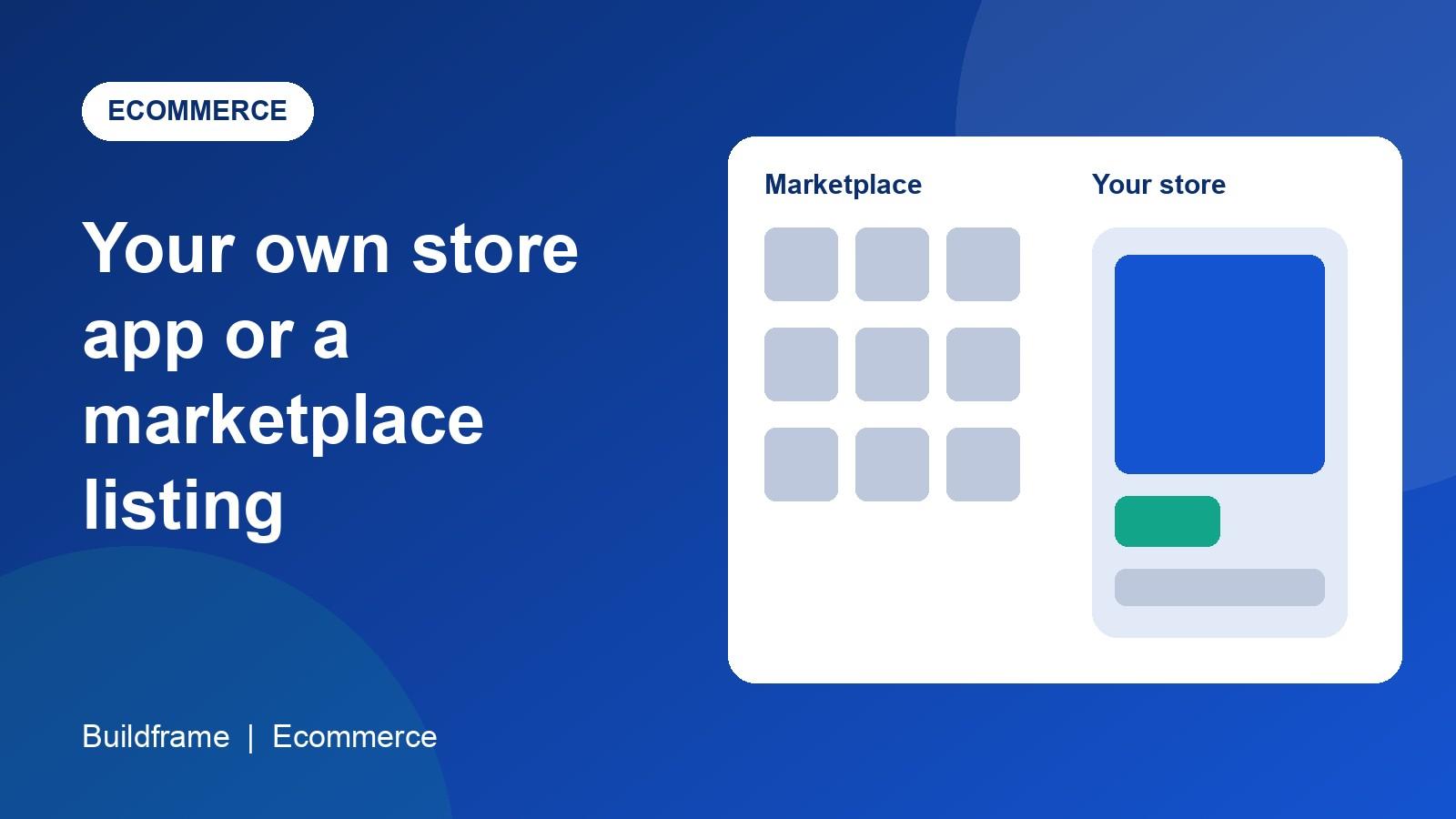
If you sell products online, a marketplace is usually the first place you look, and for good reason. The shoppers are already there. Listing is quick. You do not have to build anything.
The cost shows up later, in things that are easy to miss at the start. This post sets out what each route gives you, so you can decide how much of your selling belongs on a store of your own.
What a marketplace gives you
Be fair to it first. A marketplace gives you traffic you did not have to earn, a checkout customers already trust, and a way to start selling this week. For a new product with no audience, that is a real advantage.
What it does not give you
The customer. On a marketplace, the buyer belongs to the platform. You often cannot email them, invite them back or thank them in your own words. Each sale is a fresh start.
Your own look. Your product sits among competitors, in a layout you do not control, often next to a cheaper alternative.
Control of the rules. Fees, ranking and policies can change, and you adapt or lose the placement.
None of this makes a marketplace the wrong choice. It makes it a partner you rent from, not a place you own.
What a store of your own gives you
A store under your own name keeps the relationship in your hands. Your name, logo, colours and pictures are what the shopper sees. You decide the offers, the promo codes and the pages, such as your return policy. And you know who your customers are and what they bought, so you can serve them again.
The cost is that nobody arrives by default. You have to bring people there, through search, social media, word of mouth and the customers you already have.
Using both, in order
For most small sellers the sensible answer is not one or the other. A marketplace helps you find buyers. A store of your own helps you keep them. Many sellers list on a marketplace to be found and point repeat buyers to their own store, where the whole relationship is theirs.
If you already have people who buy from you, by message, at an event or in a shop, your own store is the obvious next step, because those buyers are ready to come directly.
When an app for your own store makes sense
A mobile app is not the first thing a new store needs. A good web store that works well on a phone does most of the job. An app starts to make sense when you have repeat customers who would use it, and when being one tap away on their phone is worth having.
Think about what an app gives that a website does not: an icon on the home screen, a place to keep saved items and the bag, and a feel that matches the phone. Think also about what it costs: building, publishing and keeping it up to date in two app stores.
The route that avoids most of that cost is an app for your store that is built and published for you, under your brand and on your own store accounts, so the app belongs to you and not to a platform.
What Buildframe Ecommerce offers
Buildframe Ecommerce is a finished store with a web storefront and a back office on one database. It runs under your name, logo, colours and pictures, on its own store address, and your own domain name is available on request. Native iOS and Android apps with Home, Shop, Saved, Bag and Account are available on request, published to your own Google Play and App Store accounts, as a one time add-on beside your plan.
Every feature is on every plan, and a 14-day free trial starts when you sign up, with no card needed. The demo store is open to anyone before you decide.
Frequently asked questions
Do I have to leave a marketplace to have my own store?
No. Many sellers use both. The marketplace helps new buyers find you, and your own store is where repeat customers can buy directly.
Do I need an app on day one?
Usually not. Start with a store that works well on a phone. Consider an app once you have repeat customers who would use it.
Who owns the app?
With Buildframe Ecommerce, apps are published to your own Google Play and App Store accounts, in your name, so the app belongs to you.