Custom-Built Website vs. Page Builder: What Actually Changes
A page builder gets a site online fast, but custom-built changes what's possible: performance, integrations, and how far the site can grow with the business.
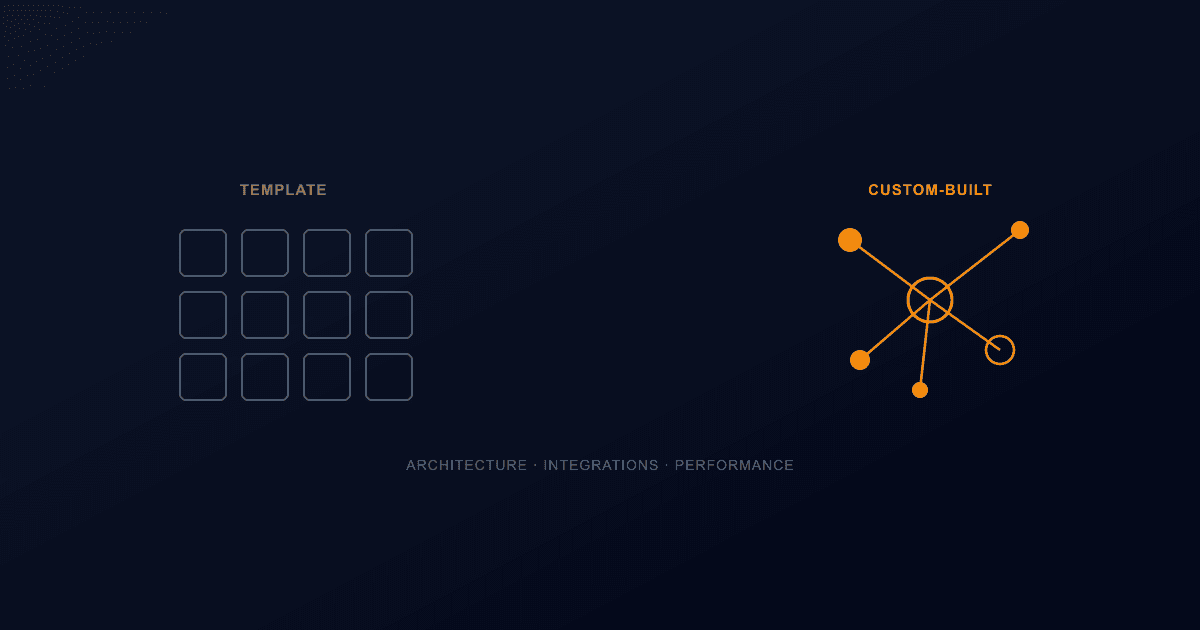
Every page builder promises the same thing: a professional-looking site without touching code. For a landing page or a personal blog, that promise mostly holds. The gap shows up once a business outgrows the template, needs a workflow a drag-and-drop editor was never built for, or needs performance a page builder's bloated runtime can't deliver. Understanding what "custom-built" actually changes, rather than treating it as a marketing label, is what makes the cost difference make sense.
What a page builder actually gives you
Page builders like Wix, Squarespace, or a generic WordPress theme genuinely earn their place: fast setup, a visual editor non-developers can use, and enough flexibility for a straightforward brochure site. The tradeoff is a shared runtime built to serve every possible use case at once, which means shipping far more JavaScript and CSS than any single site actually needs, and a data model that resists anything outside the builder's own assumptions.
What "custom-built" changes under the hood
A custom build starts from the site's actual requirements instead of a template's assumptions. Artificial Wit's marketing site needed to explain a technical AI integration platform clearly to enterprise buyers, not fit inside a generic SaaS template. The Real Estate marketplace needed listings, search, and a seller dashboard working together as one system, not three bolted-on plugins. That's the kind of structure a page builder's block-based editor isn't designed to hold.
Where the cost difference actually goes
Custom development costs more upfront because the work is architecture and integration, not template configuration. Anant Travels' booking and fleet showcase site needed a booking flow built around their actual inventory, not a generic e-commerce cart; the founder told us inquiries went up noticeably once it shipped. That kind of result comes from the site matching the business's actual workflow, not from any builder feature.
When a page builder is genuinely the right call
None of this means custom-built is always the answer. A single-page portfolio, an early-stage idea validation site, or a business with no plans to integrate booking, CRM, or custom data doesn't need a bespoke build, and a page builder will get there faster and cheaper. The honest question is whether the site needs to do something specific and non-generic, if it does, that's the point where a template starts costing more than it saves.
If it's not obvious yet which side of that line a project falls on, that's exactly what a discovery call is for: write to us through our contact page to talk through the specifics.
Frequently asked questions
Does a custom build always cost more than a page builder?
Usually more upfront, since the work is architecture and integration rather than template configuration. It doesn't necessarily cost more over the life of the site once you factor in what a page builder can't do without expensive workarounds.
Can I start on a page builder and move to a custom build later?
Yes. Plenty of businesses validate an idea on Wix or Squarespace first and commission a custom build once the site needs to do something the builder can't handle.
How do I know if my project actually needs a custom build?
If the site needs a workflow, integration, or data model that's specific to your business rather than generic, that's usually the signal. A straightforward brochure site rarely needs it.